AI in Architecture: Why Technology Should Assist Designers, Not Replace Them
Artificial intelligence has quickly become one of the most talked-about topics in the design industry. From generating realistic images to creating concepts in seconds, AI has changed the way many architects, designers, and creatives approach their work.
However, there is still a lot of uncertainty surrounding AI and what role it should play in the future of architecture.
Will AI replace designers? Will homeowners be able to design their own homes without professional help? Will creativity become automated?
I believe the answer is much more complicated.
AI is an incredibly powerful tool, but it should be used to enhance the creative process, not replace the knowledge, experience, and problem-solving skills that designers bring to a project.
The future of architecture is not about humans competing against AI. It is about designers learning how to use AI to create better results.
AI Should Be Used as a Tool, Not a Replacement
Throughout history, architecture has always adapted to new technology.
Hand drafting was eventually complemented by CAD software. Physical models evolved into 3D modeling and rendering. Today, AI is becoming another tool that designers can use to improve their workflow.
The biggest benefit of AI is not that it can create an entire project from scratch. Its value comes from helping designers complete certain tasks faster and more efficiently.
In my own workflow, I prefer to handle the majority of the creative process myself. I want to understand the project, make the important design decisions, and develop the overall vision before using AI to refine the final result.
AI works best when it supports the designer's expertise instead of replacing it.
How AI Is Improving Architectural Visualization
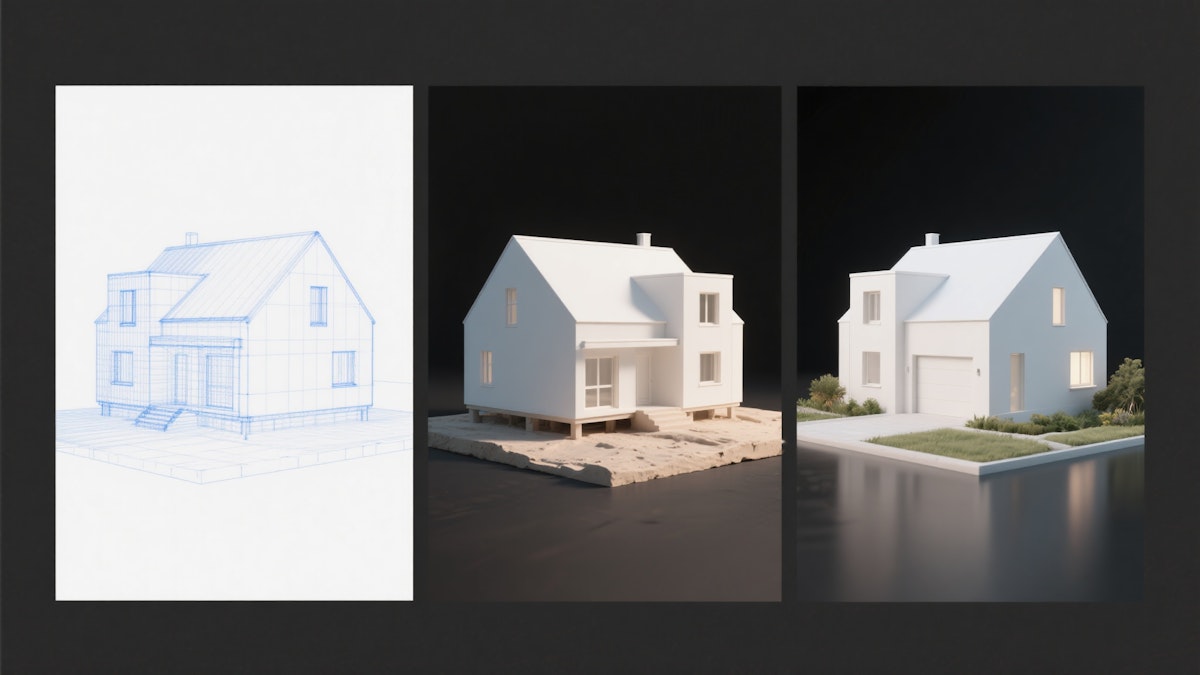
One of the biggest areas where AI has helped my workflow is creating more realistic visualizations.
In the past, creating a realistic render often required spending hours searching through online libraries trying to find the right materials, textures, furniture, and finishes for a project.
Finding the exact wood grain, stone texture, or fabric that matched a design vision could be a time-consuming process. Even after searching through countless resources, you might still not find exactly what you imagined.
Today, AI allows designers to create custom materials and visual elements that better match the specific needs of a project.
Instead of spending hours searching for the perfect texture, designers can focus more time on the actual design decisions and use AI to help bring their ideas to life.
This does not remove creativity from the process. It gives designers more freedom to explore ideas and create higher-quality presentations for their clients.
A Beautiful Image Does Not Always Equal Good Architecture
One of the biggest misconceptions about AI-generated designs is that a realistic image automatically represents a realistic project.
AI is very good at creating impressive visuals, but architecture is much more than creating something that looks good.
A real project needs to consider:
Building codes and regulations
Structural limitations
Construction methods
Material performance
Budget constraints
The client's lifestyle and needs
How spaces function together
When a homeowner is designing a project, they are not just paying for a pretty image. They are paying for the knowledge and experience needed to turn an idea into something that can actually be built.
A beautiful AI-generated concept may inspire a project, but it does not replace the process of developing accurate drawings, solving problems, and making sure everything works in the real world.
The Risk of Depending Too Much on AI
While AI can make designers more efficient, there is also a risk of becoming too dependent on it.
Architects and designers spend years learning about space, materials, construction, and how buildings come together. That knowledge is what allows them to make decisions and recognize when something does not make sense.
AI can generate possibilities, but designers need the experience to evaluate those possibilities.
A good comparison is that AI is like a power tool. A skilled carpenter can use a power tool to work faster and create better results, but the tool itself does not replace the knowledge of how to build.
The same applies to architecture. The best results will come from designers who understand their craft and know how to use AI effectively.
Why Homeowners Still Need Designers
As AI becomes more accessible, many homeowners may start wondering if they can simply design their own homes using AI tools instead of hiring a professional.
At first, this may seem like a way to save money. Someone can generate a few images, create a concept, and feel like they have solved the design problem.
However, many important issues are not visible until construction begins.
A designer helps identify problems before they become expensive mistakes. They understand how spaces function, how materials work together, and what decisions need to be made before a project moves forward.
The biggest difference between an AI-generated image and a professionally designed project is the knowledge behind the decisions.
AI can show you what something could look like. A designer helps determine whether it can actually become reality.
The Future of Architecture Is Human Creativity Combined With AI
I do not believe AI will replace architects and designers. Instead, I believe it will separate those who adapt from those who do not.
The designers who succeed will be the ones who understand how to combine their creativity and expertise with new technology.
AI can help save time. It can help create better visuals. It can help explore ideas faster.
But the human element will always be necessary.
Architecture is about understanding people, solving complex problems, and creating spaces that improve the way we live. Those decisions require experience, creativity, and judgment.
The future of design is not AI replacing humans.
It is humans using AI to create better.
Artificial intelligence has quickly become one of the most talked-about topics in the design industry. From generating realistic images to creating concepts in seconds, AI has changed the way many architects, designers, and creatives approach their work.
However, there is still a lot of uncertainty surrounding AI and what role it should play in the future of architecture.
Will AI replace designers? Will homeowners be able to design their own homes without professional help? Will creativity become automated?
I believe the answer is much more complicated.
AI is an incredibly powerful tool, but it should be used to enhance the creative process, not replace the knowledge, experience, and problem-solving skills that designers bring to a project.
The future of architecture is not about humans competing against AI. It is about designers learning how to use AI to create better results.
AI Should Be Used as a Tool, Not a Replacement
Throughout history, architecture has always adapted to new technology.
Hand drafting was eventually complemented by CAD software. Physical models evolved into 3D modeling and rendering. Today, AI is becoming another tool that designers can use to improve their workflow.
The biggest benefit of AI is not that it can create an entire project from scratch. Its value comes from helping designers complete certain tasks faster and more efficiently.
In my own workflow, I prefer to handle the majority of the creative process myself. I want to understand the project, make the important design decisions, and develop the overall vision before using AI to refine the final result.
AI works best when it supports the designer's expertise instead of replacing it.
How AI Is Improving Architectural Visualization
One of the biggest areas where AI has helped my workflow is creating more realistic visualizations.
In the past, creating a realistic render often required spending hours searching through online libraries trying to find the right materials, textures, furniture, and finishes for a project.
Finding the exact wood grain, stone texture, or fabric that matched a design vision could be a time-consuming process. Even after searching through countless resources, you might still not find exactly what you imagined.
Today, AI allows designers to create custom materials and visual elements that better match the specific needs of a project.
Instead of spending hours searching for the perfect texture, designers can focus more time on the actual design decisions and use AI to help bring their ideas to life.
This does not remove creativity from the process. It gives designers more freedom to explore ideas and create higher-quality presentations for their clients.
A Beautiful Image Does Not Always Equal Good Architecture
One of the biggest misconceptions about AI-generated designs is that a realistic image automatically represents a realistic project.
AI is very good at creating impressive visuals, but architecture is much more than creating something that looks good.
A real project needs to consider:
Building codes and regulations
Structural limitations
Construction methods
Material performance
Budget constraints
The client's lifestyle and needs
How spaces function together
When a homeowner is designing a project, they are not just paying for a pretty image. They are paying for the knowledge and experience needed to turn an idea into something that can actually be built.
A beautiful AI-generated concept may inspire a project, but it does not replace the process of developing accurate drawings, solving problems, and making sure everything works in the real world.
The Risk of Depending Too Much on AI
While AI can make designers more efficient, there is also a risk of becoming too dependent on it.
Architects and designers spend years learning about space, materials, construction, and how buildings come together. That knowledge is what allows them to make decisions and recognize when something does not make sense.
AI can generate possibilities, but designers need the experience to evaluate those possibilities.
A good comparison is that AI is like a power tool. A skilled carpenter can use a power tool to work faster and create better results, but the tool itself does not replace the knowledge of how to build.
The same applies to architecture. The best results will come from designers who understand their craft and know how to use AI effectively.
Why Homeowners Still Need Designers
As AI becomes more accessible, many homeowners may start wondering if they can simply design their own homes using AI tools instead of hiring a professional.
At first, this may seem like a way to save money. Someone can generate a few images, create a concept, and feel like they have solved the design problem.
However, many important issues are not visible until construction begins.
A designer helps identify problems before they become expensive mistakes. They understand how spaces function, how materials work together, and what decisions need to be made before a project moves forward.
The biggest difference between an AI-generated image and a professionally designed project is the knowledge behind the decisions.
AI can show you what something could look like. A designer helps determine whether it can actually become reality.
The Future of Architecture Is Human Creativity Combined With AI
I do not believe AI will replace architects and designers. Instead, I believe it will separate those who adapt from those who do not.
The designers who succeed will be the ones who understand how to combine their creativity and expertise with new technology.
AI can help save time. It can help create better visuals. It can help explore ideas faster.
But the human element will always be necessary.
Architecture is about understanding people, solving complex problems, and creating spaces that improve the way we live. Those decisions require experience, creativity, and judgment.
The future of design is not AI replacing humans.
It is humans using AI to create better.
Artificial intelligence has quickly become one of the most talked-about topics in the design industry. From generating realistic images to creating concepts in seconds, AI has changed the way many architects, designers, and creatives approach their work.
However, there is still a lot of uncertainty surrounding AI and what role it should play in the future of architecture.
Will AI replace designers? Will homeowners be able to design their own homes without professional help? Will creativity become automated?
I believe the answer is much more complicated.
AI is an incredibly powerful tool, but it should be used to enhance the creative process, not replace the knowledge, experience, and problem-solving skills that designers bring to a project.
The future of architecture is not about humans competing against AI. It is about designers learning how to use AI to create better results.
AI Should Be Used as a Tool, Not a Replacement
Throughout history, architecture has always adapted to new technology.
Hand drafting was eventually complemented by CAD software. Physical models evolved into 3D modeling and rendering. Today, AI is becoming another tool that designers can use to improve their workflow.
The biggest benefit of AI is not that it can create an entire project from scratch. Its value comes from helping designers complete certain tasks faster and more efficiently.
In my own workflow, I prefer to handle the majority of the creative process myself. I want to understand the project, make the important design decisions, and develop the overall vision before using AI to refine the final result.
AI works best when it supports the designer's expertise instead of replacing it.
How AI Is Improving Architectural Visualization
One of the biggest areas where AI has helped my workflow is creating more realistic visualizations.
In the past, creating a realistic render often required spending hours searching through online libraries trying to find the right materials, textures, furniture, and finishes for a project.
Finding the exact wood grain, stone texture, or fabric that matched a design vision could be a time-consuming process. Even after searching through countless resources, you might still not find exactly what you imagined.
Today, AI allows designers to create custom materials and visual elements that better match the specific needs of a project.
Instead of spending hours searching for the perfect texture, designers can focus more time on the actual design decisions and use AI to help bring their ideas to life.
This does not remove creativity from the process. It gives designers more freedom to explore ideas and create higher-quality presentations for their clients.
A Beautiful Image Does Not Always Equal Good Architecture
One of the biggest misconceptions about AI-generated designs is that a realistic image automatically represents a realistic project.
AI is very good at creating impressive visuals, but architecture is much more than creating something that looks good.
A real project needs to consider:
Building codes and regulations
Structural limitations
Construction methods
Material performance
Budget constraints
The client's lifestyle and needs
How spaces function together
When a homeowner is designing a project, they are not just paying for a pretty image. They are paying for the knowledge and experience needed to turn an idea into something that can actually be built.
A beautiful AI-generated concept may inspire a project, but it does not replace the process of developing accurate drawings, solving problems, and making sure everything works in the real world.
The Risk of Depending Too Much on AI
While AI can make designers more efficient, there is also a risk of becoming too dependent on it.
Architects and designers spend years learning about space, materials, construction, and how buildings come together. That knowledge is what allows them to make decisions and recognize when something does not make sense.
AI can generate possibilities, but designers need the experience to evaluate those possibilities.
A good comparison is that AI is like a power tool. A skilled carpenter can use a power tool to work faster and create better results, but the tool itself does not replace the knowledge of how to build.
The same applies to architecture. The best results will come from designers who understand their craft and know how to use AI effectively.
Why Homeowners Still Need Designers
As AI becomes more accessible, many homeowners may start wondering if they can simply design their own homes using AI tools instead of hiring a professional.
At first, this may seem like a way to save money. Someone can generate a few images, create a concept, and feel like they have solved the design problem.
However, many important issues are not visible until construction begins.
A designer helps identify problems before they become expensive mistakes. They understand how spaces function, how materials work together, and what decisions need to be made before a project moves forward.
The biggest difference between an AI-generated image and a professionally designed project is the knowledge behind the decisions.
AI can show you what something could look like. A designer helps determine whether it can actually become reality.
The Future of Architecture Is Human Creativity Combined With AI
I do not believe AI will replace architects and designers. Instead, I believe it will separate those who adapt from those who do not.
The designers who succeed will be the ones who understand how to combine their creativity and expertise with new technology.
AI can help save time. It can help create better visuals. It can help explore ideas faster.
But the human element will always be necessary.
Architecture is about understanding people, solving complex problems, and creating spaces that improve the way we live. Those decisions require experience, creativity, and judgment.
The future of design is not AI replacing humans.
It is humans using AI to create better.
Email Author

Email Author